News · 30 July 2026

‘the churchie’ Curator’s Essay

the churchie Emerging Art Prize 2026 Finalists’ Exhibition, Curator’s Essay

Established in 1987, the churchie emerging art prize (‘the churchie’) is one of Australia’s longest-running visual art prize dedicated to emerging artists. Presented annually by Anglican Church Grammar School (Churchie), the non-acquisitive prize has built a strong reputation for promoting innovation and excellence in contemporary artistic practice. ‘the churchie’ invites Australian artists aged 18 and over to submit works across all subjects and themes, in a variety of media.

In 2026, the prize attracted 550 entries from around the country, with 17 outstanding artists selected as finalists. Together, they represent a compelling snapshot of contemporary art practice in Australia today.

Conditions of Emergence

Prize exhibitions are contingent assemblies, shaped by longer histories of access, education and self-speculation. More so than grants, commissions and residencies, prizes present particularly dramatic moments in art life, where we come face to face with our own taste, the frisson of competition, and our capacity to take genuine pleasure in another’s success and emergence. They are appreciated by artists and institutions in the way they mess with hierarchies, granting visibility, network effects and curatorial attention. For these reasons, and many others, prizes continue to proliferate globally, while broader conditions of production become more challenging.

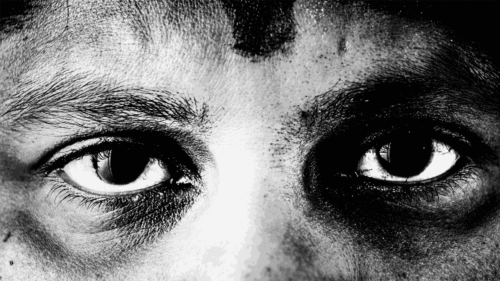
‘the churchie’, Australia’s longest-running art prize for emerging artists registers something of these straddled aspects of austerity and extravagance through which contemporary art is taking shape. What stands out among the finalists this year is a commitment to intergenerational and infrastructural literacies. Almost every work asks how subjects and territories are produced – through various medical, colonial, bureaucratic, algorithmic, ecological, familial and migratory systems – and how artistic practice might metabolise to know those structures differently, rather than merely representing or suspending their reality. Across installation, moving image (Huiyi Xiao, The Fire That Wouldn’t Call Itself Ash (Still) pictured), textiles, painting, sculpture and drawing, research becomes both method and medium. The continuing interest of artists in video is notable, given how limited the financial return on such practices can be within both private and institutional markets.

Mobility and inheritance are explored through material and archival experiments. In Anna Weston’s merging of portraiture with landscape, the Cascades Female Factory in Tasmania that for so long figured as a convict women’s story only, gives equal staging to entangled Aboriginal women’s lives, as part of its hazy, compositional deliberations over incomplete records. Alice McCool’s Initial Social History and Bimil 비밀 extends archival inquiry into the bureaucratic infrastructures of South Korea’s once-lauded intercountry adoption history. Television advertisements from the 1980s project over a traditional Korean lock, symbolising mechanisms through which biography, state administration and genealogy are abusively withheld despite long-awaited truth-telling inquiries.

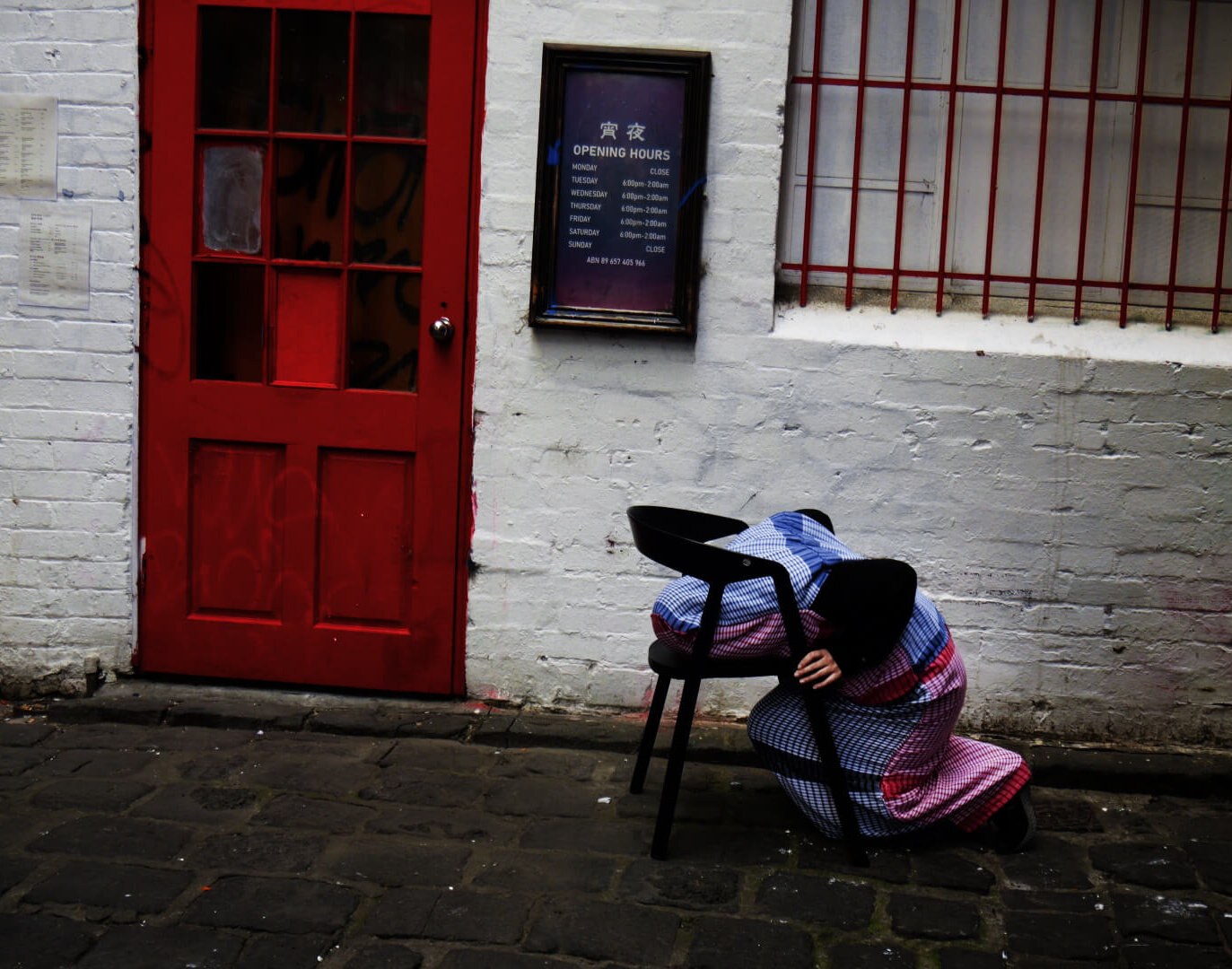
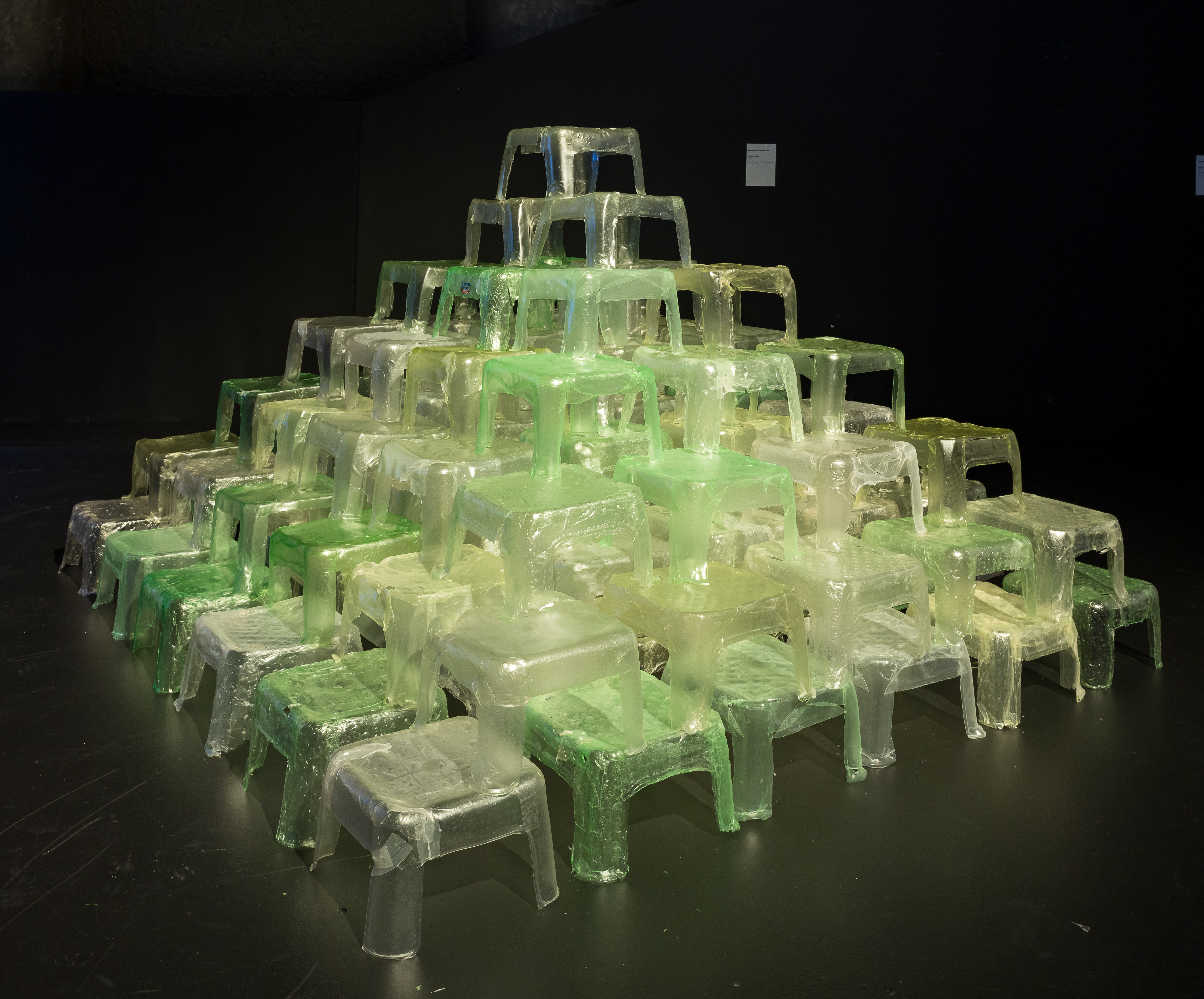
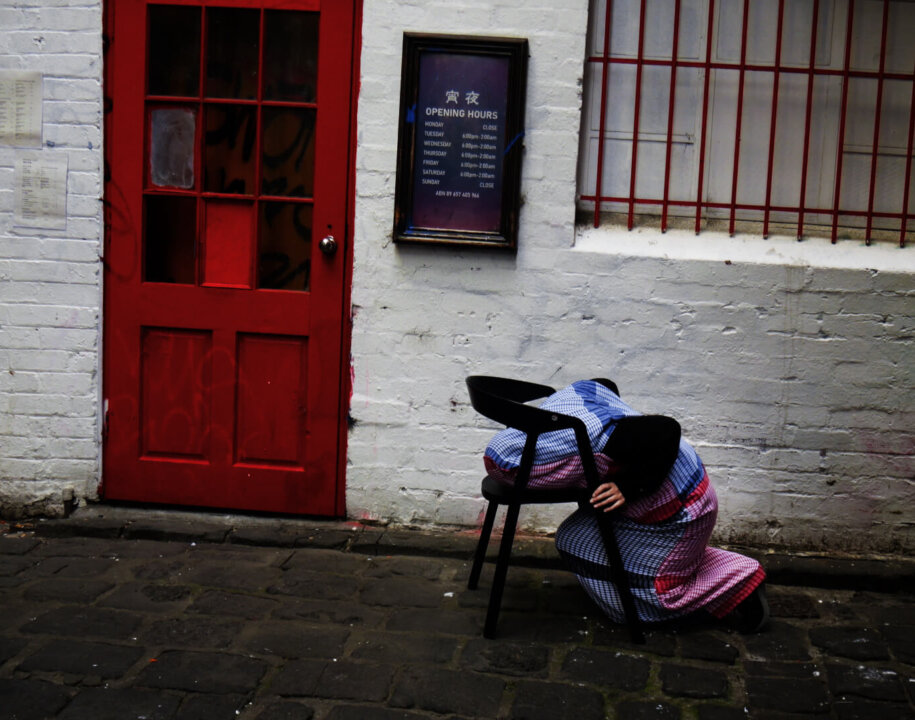
Across multiple works, migration appears as unfinished condition. Huiyi Xiao performs the ‘deskilling’ of hospitality work on a temporary visa, where the Australian system eliminates prior professional experience, to ensure only lowest-paid job access (pictured above). Playfulness interrupts exploitation. Rosemary Tamas-Cao’s rice-paper stools (pictured) honour modest infrastructures of commerce in Southeast Asia and diasporic marketplaces that hold labour, rest and culture so ordinary as to be overlooked as convivial architecture. Keroshin Govender paints himself into vernacular family photographs shaped by apartheid in South Africa, preserving intimate life events and achievements beyond the limits of critique. Badra Aji in Tiap Selasa Sore (Every Tuesday Afternoon) turns to family as the smallest social institution. An awkward swimming lesson is layered with memories addressed to a half-sister, navigating queerness and Muslim heritage to hold kinship tenderly.

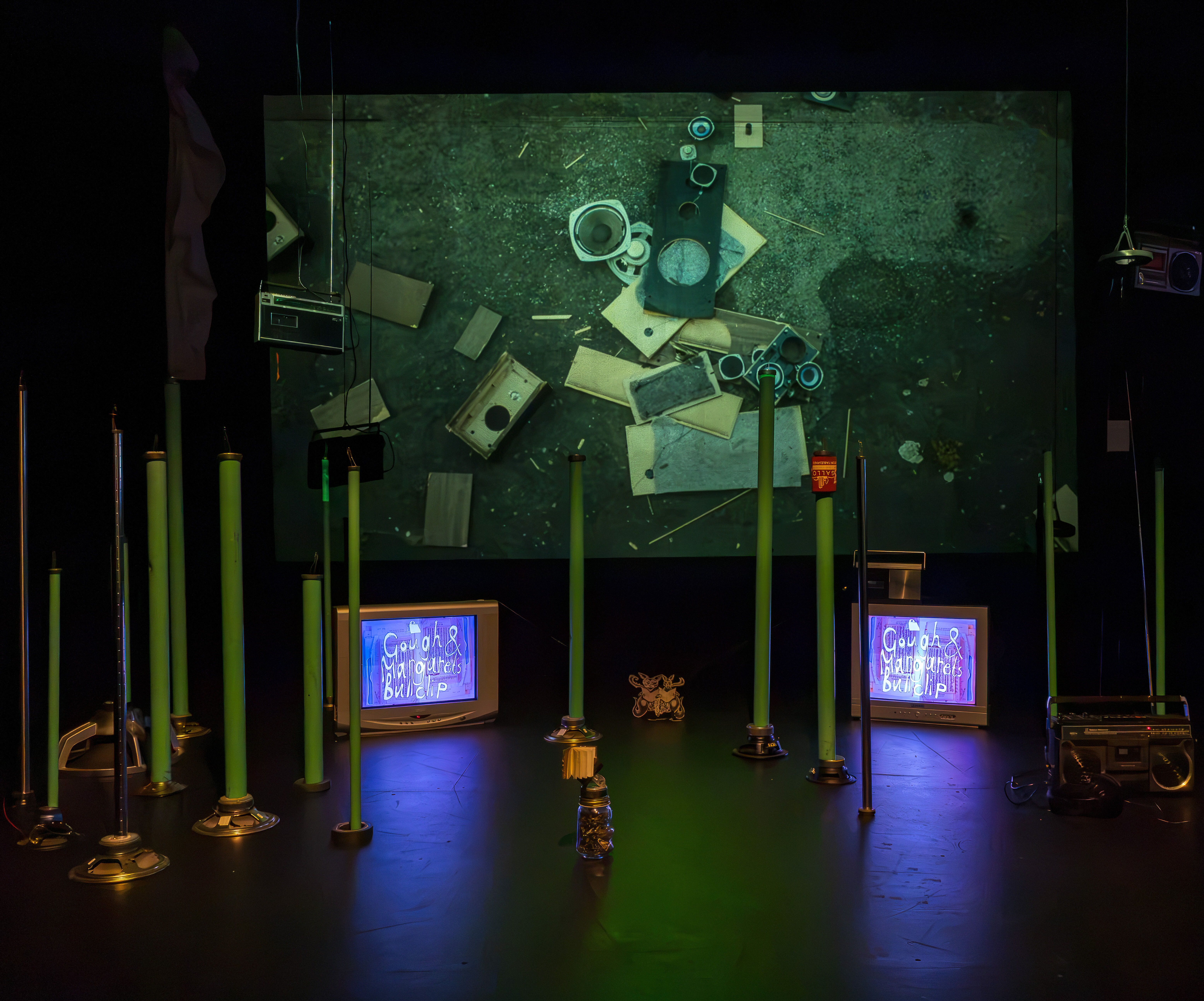
Several artists interrogate cultures of projective governance and technology. Georgia Lucy (installation pictured) reanimates a forgotten competition, abandoned by the Whitlam government, to replace the Australian national anthem. The bathos of her favourite entry sends her in the direction of cheese samples on a North Queensland dairy frontier, while floodwaters force a more planetary reckoning. In a more confronting but equally strange register, Yanti Peng’s new.life drifts between virtual role-playing worlds and memories of Hainan before rapid industrialisation, as we process the slow reshaping of perception through platforms.

Jonny Scholes stages an Australian civic imaginary organised around a collapse of trust in generative AI. Workers surveil degraded information environments in an office space unnerving for taking so little leave from the present. Biopolitical commentary is more intimately seared in Alannah Dair’s analogue of endometriosis tissue, stretched and pincered across an entire ceiling. A feminist intervention into objectification implicates viewers within a normally privated experience of medical misogyny, through precise interactive programming.

If institutions and algorithms misread, violate and make strange figures of contemporary life, Country at the beginning and end of the upstairs gallery offers an entirely different order of cultural work and sovereign gravity. In Zena Zada Cumpston’s shapeshift;karnka/iuk; and (GHOST) shapeshift;karnka/iuk (pictured on back wall of gallery), the eel becomes a living emblem of embodied adaptation to environmental change, while the karnka, or digging stick, recalls reciprocal obligations through repetitions that are anti-extractive. Juanita McLaughlin’s hand-stitched textiles that entangle woollen blankets with possum fur are altered sites of Gamilaraay knowledge transmission, reconnecting smothered botanical temporalities.

With similar reverence, Kuweni Dias Mendis’ Temple suspends a monumental canvas with pigments gathered from Sri Lanka’s Gala Oya River, creating a temporary gathering place to imagine planetary ancestors, without usurping sovereignties here or there. Ena Grozdanic’s Sabotage in Seven Acts follows a different river in her former Yugoslav hometown, where climate catastrophe is organised through melancholy’s movement toward poetry and protest. In Aris Prabawa’s drawing In Heart We Trust, figures hold one another beneath an alien force of authoritarianism in Indonesian politics; ambition for culture is collective survival and care. For many of these finalists, cultural work beyond the gallery is managed differently, but remains inseparable from the objects made for it.

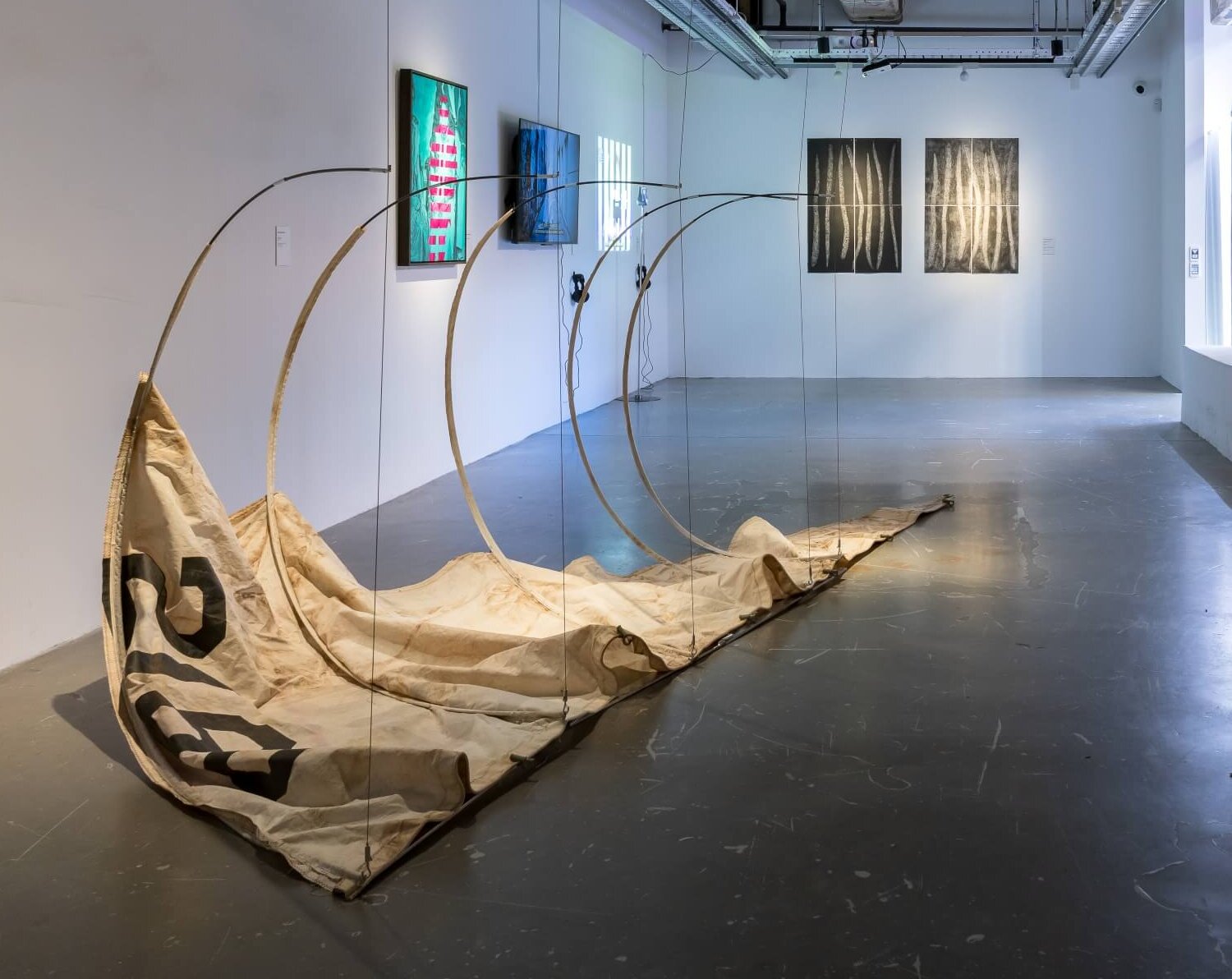
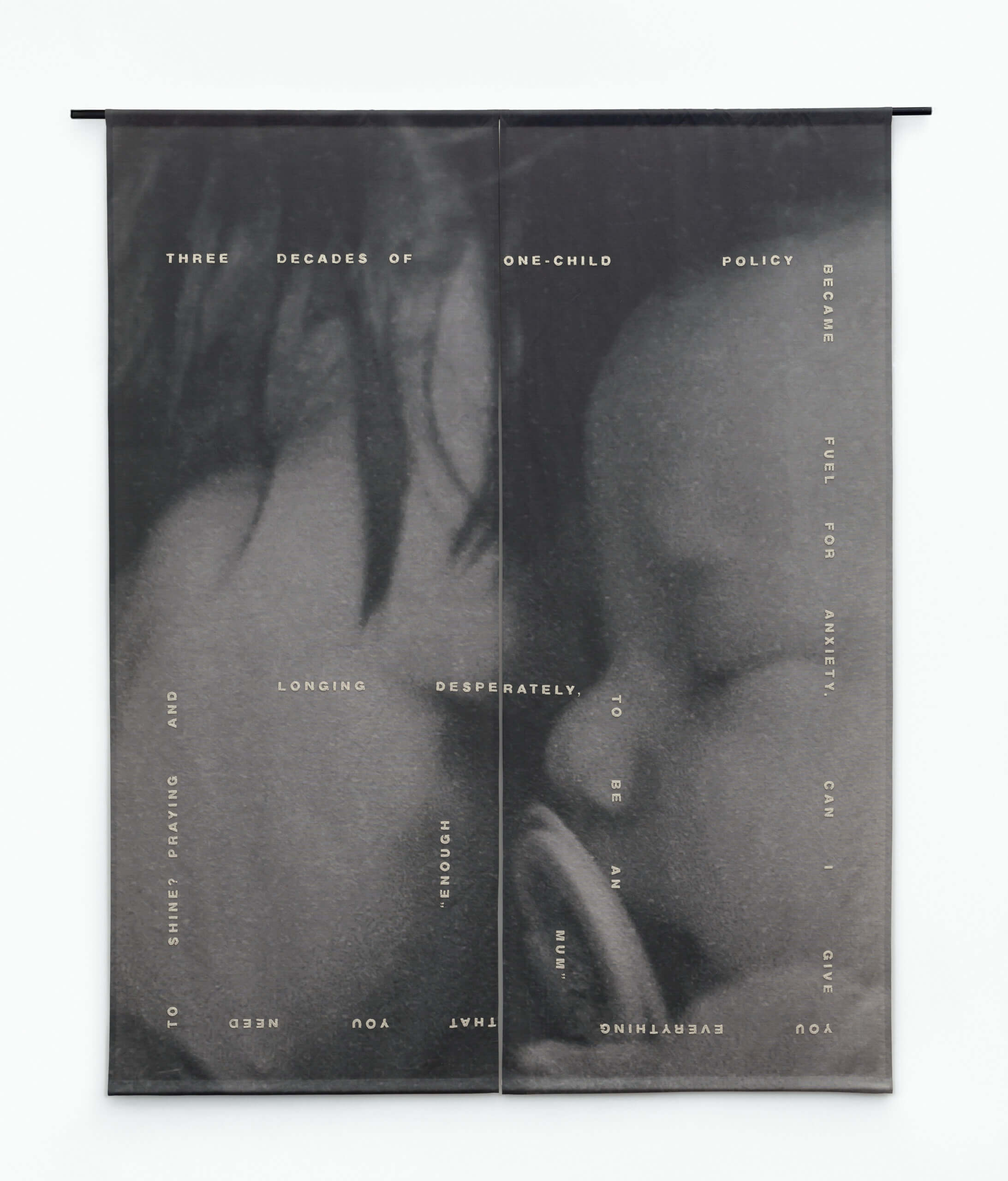
Several works foreground conditions of dependency and maintenance that have always been a part of artistic life, but that conventional narratives of virtuosity obscure. MeiMei 莓莓 Hodgkinson’s beaded textile (pictured), developed over ten months alongside the labour of raising a child, traces the lingering effects of China’s One Child Policy through maternal anxiety and the impossible aspiration to become Enough Mum in Australia. Artistic production and reproductive labour interrupt, feed and challenge one another. Olive Guardiani’s Kite Lung (pictured in foreground, above) seems to propose dependency as a formal principle. Genoese sailcloth stretches against portable tent poles in a sculpture that mimes breath, pressure and temporary equilibrium. Neither material can sustain itself. The tension between tautness and potential collapse comes out of a continual negotiation with surrounding forces, in a work that offers almost a leitmotif for contemporary conditions.

Metro is very happy to host ‘the churchie’ this third year in a row and encourages you to spend time with these risked qualities of contemporary emerging practice.

Rachel O’Reilly Curator, Metro Arts

Acknowledgements

For the third consecutive year, ‘the churchie’ is proud to partner with Metro Arts as its Programming Partner. This collaboration strengthens the prize’s commitment to nurturing talent and creating meaningful opportunities for artists.

This year marks a significant milestone for the prize, with the major prize valued at $40,000, generously supported by long-term partner BSPN Architecture. This investment reflects a deepened commitment to championing emerging artists and supporting their development at a critical stage of their careers.

In addition to the major prize, there are four additional awards: the Special Commendation Prize, sponsored by Fardoulys Constructions, and two Commendation Prizes, sponsored by Madison Facility Services. A People’s Choice Award, sponsored by Hutchinson Builders, will also be announced at the conclusion of the exhibition.

Artist finalists: Badra Aji, Zena Zada Cumpston, Alannah Dair, Kuweni Dias Mendis, Keroshin Govender, Ena Grozdanic, Olive Guardiani, MeiMei Hodgkinson, Georgia Lucy, Alice McCool, Juanita McLauchlan, Yanti Peng, Aris Prabawa, Jonny Scholes, Rosemary Tamas-Cao, Anna Weston, Huiyi Xiao.

Images
Huiyi Xiao, The Fire That Wouldn’t Call Itself Ash, 2025 (still).

Rosemary Tamas Cao, Squat Tossed, 2026.

Georgia Lucy, Gough and Margaret’s Bullclip, 2025 (image of installation).

Olive Guardiani, Kite Lung, 2026. (foreground); Zena Zada Cumpston’s shapeshift;karnka/iuk; and (GHOST) shapeshift;karnka/iuk (pictured on back wall of gallery)

MeiMei Hodgkinson, Enough Mum, 2024-2025.
 

Support Us